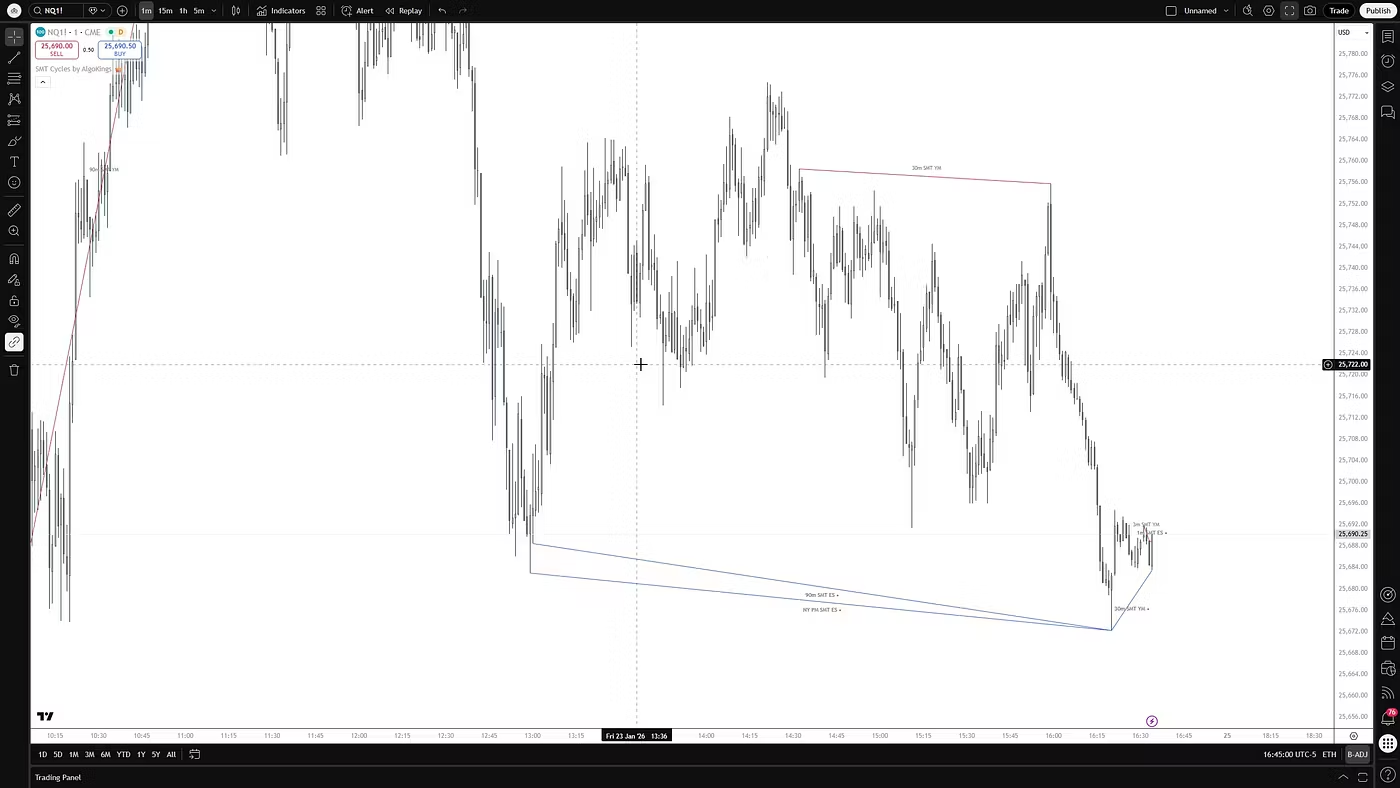
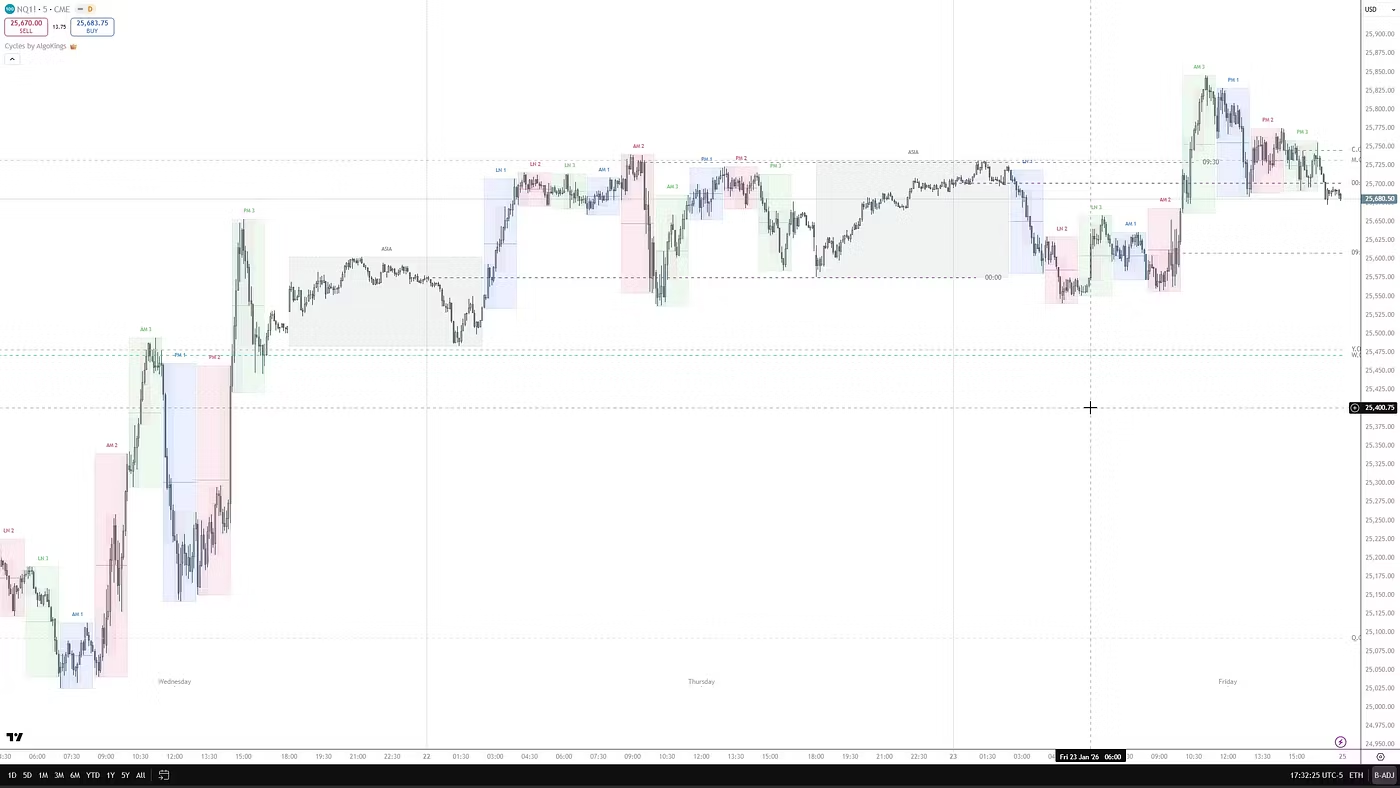
The Judas Swing Explained (ICT)
The Judas Swing is an Inner Circle Trader (ICT) concept describing a deliberate false move at the start of a trading session that sweeps liquidity before price reverses and runs in its true intended direction. It is named after the biblical betrayal because the early move "betrays" traders who chase it, and it represents the manipulation leg of ICT's Power of Three model.
What the Judas Swing is and why it has that name
In ICT theory, the Judas Swing is the first, misleading price move after a session opens. Price pushes in one direction just far enough to trigger stop orders and tempt breakout traders, then reverses and trends the other way. The name references Judas leading others astray: the initial move looks like the start of a trend but is treated as a trap. Whether you view it as literal institutional manipulation or simply as a recurring liquidity-driven pattern, the practical takeaway is the same. An early move against the eventual direction is common, so chasing the first push of a session carries real risk.
The Power of Three context and timing
The Judas Swing is the middle phase of ICT's Power of Three: accumulation during the Asian session, manipulation (the Judas Swing) around the London open, and distribution during the New York session. It typically forms within the New York midnight-to-5:00 AM ET window, with peak activity near the London open around 3:00 AM ET. The midnight open (00:00 ET) is used as a reference price. The concept is session-anchored, not 'any fake move' at any hour, so a sweep outside this window is generally not treated as a Judas Swing.
Bullish vs. bearish setups
- Bullish Judas Swing: price first spikes below the opening price or the Asian-session low to sweep sell-side liquidity and trigger stops, then reverses upward in the true intended direction.
- Bearish Judas Swing: price first spikes above the open to grab buy-side liquidity (resting buy stops), then drops.
- The 'fake' leg targets obvious pools of liquidity. The reversal, not the spike, is what defines the pattern.
How traders structure the analysis
- Establish a directional bias first. The swing is only meaningful relative to an intended direction. A liquidity sweep on its own is not a signal.
- Mark the midnight open and identify the false move into a known liquidity pool (a prior high/low or session extreme).
- Wait for a Market Structure Shift (MSS) with displacement on a lower timeframe to confirm the reversal. Entering on the sweep alone, before the MSS, is the most common way traders get caught by a genuine breakout.
- Use the PD arrays left by the displacement: enter on a retest of the resulting fair value gap (FVG) or order block (OB).
- Place the stop a small buffer (sized to the instrument, e.g. ~10-20 pips on forex majors) beyond the swept wick rather than tight on the extreme, since price routinely retests the wick. Reference the opposite liquidity pool or prior session high/low for context.
- Use 15m or 5m for identification and 5m/3m/1m for execution. It is commonly applied to forex majors, gold (XAUUSD), and indices, and ties into ICT killzones.
What invalidates the setup, and a word on practice
If price closes and holds beyond the open through the formation window, it is likely a genuine breakout or trend day, not a Judas Swing, and forcing the trade tends to lead to losses. Other common pitfalls include treating it as a guaranteed daily event (it is one of several probabilistic ICT daily profiles, not a certainty), placing stops too tight, and over-leveraging a 1-minute entry before mastering identification on higher timeframes. Treat the Judas Swing as an interpretive framework rather than proven institutional order flow, study it on past charts and in a demo environment before any live application, and always manage risk. This is educational analysis, not financial advice.
Frequently asked questions
What time does the Judas Swing happen and in what timezone?
In ICT theory it forms within the New York midnight-to-5:00 AM ET window, with peak activity near the London open around 3:00 AM ET. The 00:00 ET midnight open is used as a reference price. Times are quoted in Eastern Time, and moves outside this window are generally not treated as Judas Swings.
What confirms an entry on a Judas Swing?
Traders typically require three things: an established directional bias, a liquidity sweep of a known high or low, and a Market Structure Shift with displacement on a lower timeframe. Entry is usually taken on a retest of the fair value gap or order block left by the displacement, not on the sweep alone.
How is a Judas Swing different from a normal liquidity grab?
A liquidity grab can happen at any time, while the Judas Swing is session-anchored to the midnight-to-London-open window and tied to the Power of Three manipulation phase. It is meaningful only relative to a daily bias and a confirmed reversal, whereas a generic stop hunt carries no such directional or timing context.
Risk disclosure
AlgoKings provides technical analysis indicators and educational material for informational purposes only. Nothing on this website is financial, investment or trading advice. Trading financial instruments carries a high level of risk and may not be suitable for every investor; you can lose some or all of your capital. Indicators do not predict future price movements and do not guarantee any outcome. You are solely responsible for your own trading decisions and risk management. Past performance is not indicative of future results.