What Is a Fair Value Gap (FVG)?
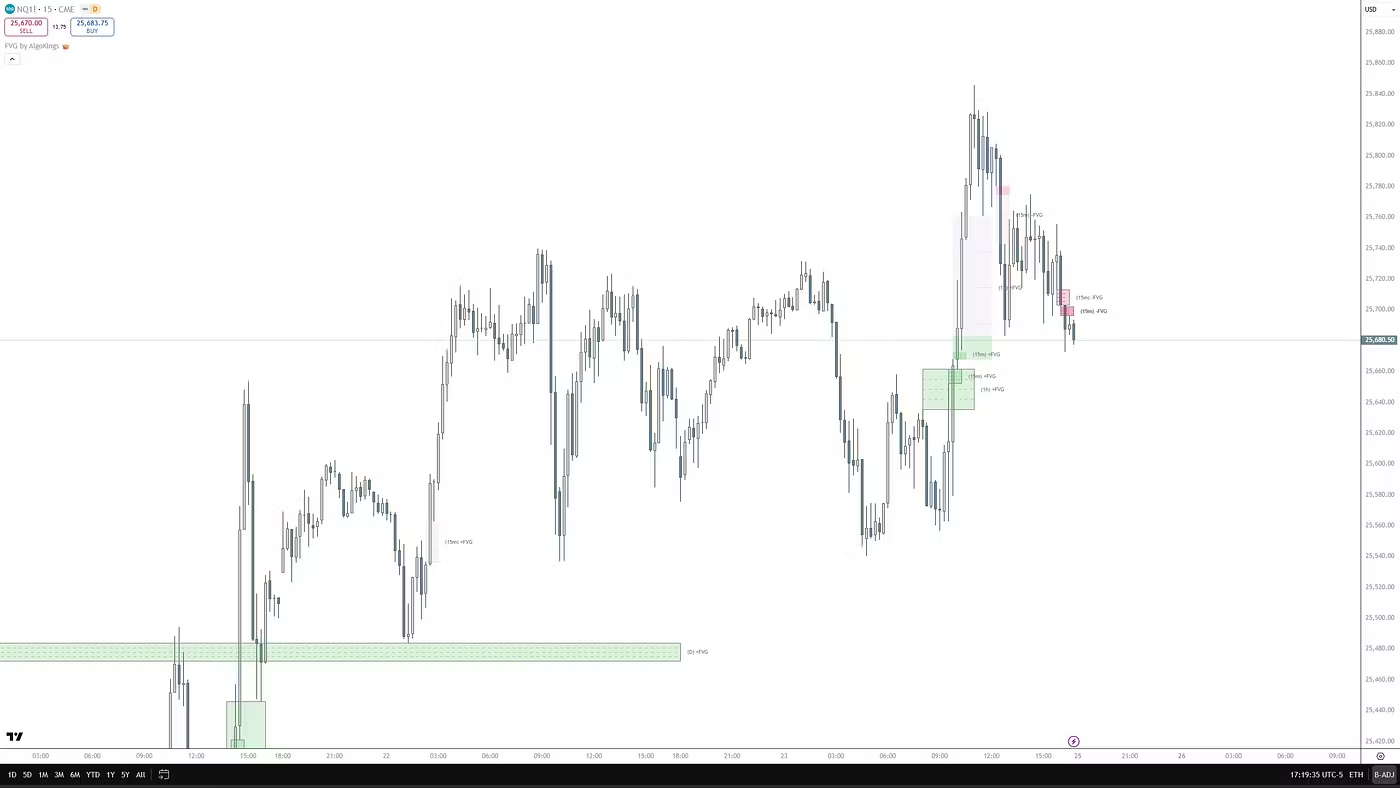
A Fair Value Gap (FVG) is a price imbalance created by three consecutive candles where the wicks of the first and third candle do not overlap — leaving a gap that the market often returns to fill.
How a fair value gap forms
When price moves aggressively in one direction, buyers and sellers don't transact evenly across every price. That fast move leaves an inefficiency — a range of prices that were skipped. In a bullish FVG, the gap is the space between the high of the first candle and the low of the third candle.
Why price returns to fill gaps
Markets tend toward efficiency. Unfilled gaps represent prices where orders couldn't be matched, so price frequently revisits them to 'rebalance' before continuing. This is why FVGs make practical entry zones and targets.
Using FVGs in a trade
- Identify the direction of the higher-timeframe trend.
- Mark fresh, unmitigated fair value gaps in that direction.
- Look for price to return into the gap as a potential entry.
- Use the opposite side of the gap or recent structure for stop placement.
Frequently asked questions
What is a fair value gap?
A fair value gap is a three-candle price imbalance where the first and third candles' wicks don't overlap, leaving a gap of skipped prices that the market often returns to fill.
Do all fair value gaps get filled?
No. Gaps tend to get filled because markets seek efficiency, but it isn't guaranteed. Traders treat unfilled gaps as zones of interest, not certainties, and always define risk.
What is the difference between an FVG and an order block?
An order block is the last opposing candle before a strong move; a fair value gap is the imbalance left by that move. They often appear together and are used as complementary entry zones.
Risk disclosure
AlgoKings provides technical analysis indicators and educational material for informational purposes only. Nothing on this website is financial, investment or trading advice. Trading financial instruments carries a high level of risk and may not be suitable for every investor; you can lose some or all of your capital. Indicators do not predict future price movements and do not guarantee any outcome. You are solely responsible for your own trading decisions and risk management. Past performance is not indicative of future results.