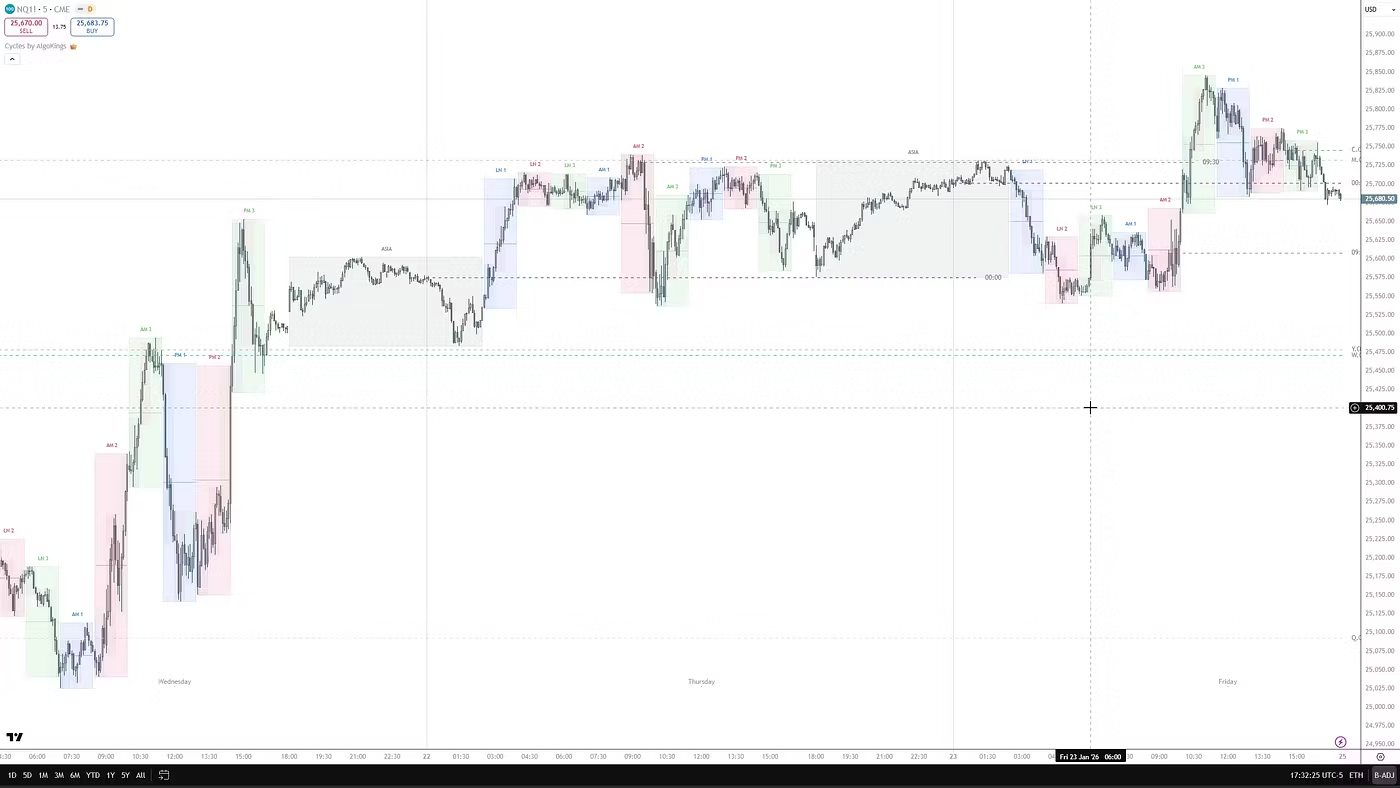
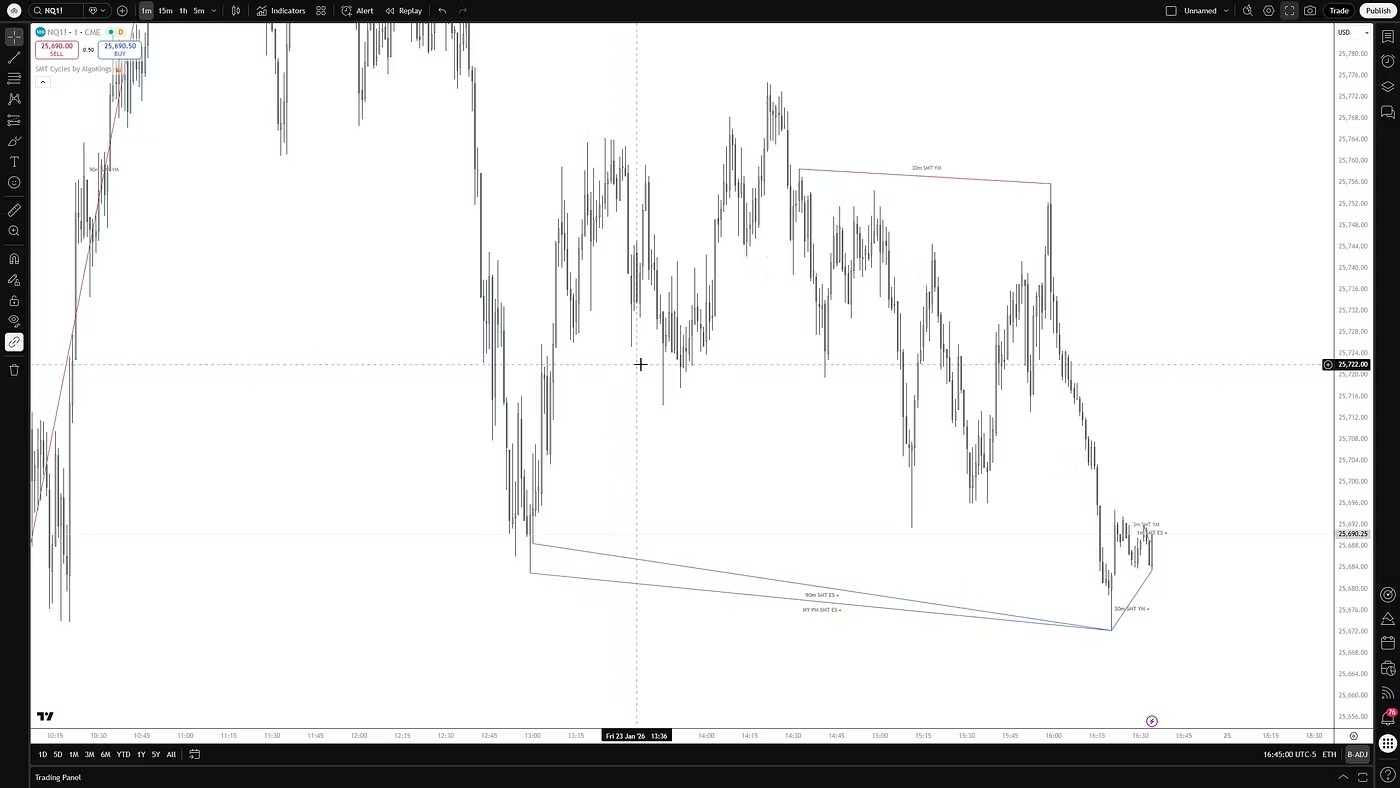
Market Structure Shift (MSS) Explained
A Market Structure Shift (MSS) is the first technical sign that a trend may be reversing — it happens when price breaks a significant swing point against the prevailing trend, confirmed by a strong, full-bodied candle close (displacement). It is a core Smart Money Concepts / ICT idea used to flag a possible change in directional bias before a new trend is established.
What a Market Structure Shift actually is
Markets trend in a sequence of swing highs and swing lows. An uptrend prints higher highs and higher lows; a downtrend prints lower highs and lower lows. A Market Structure Shift occurs the moment price breaks one of these swing points in the opposite direction of the trend — for example, closing below a prior higher low while in an uptrend, or above a prior lower high while in a downtrend. That break is the earliest structural hint that control may be passing from buyers to sellers (or vice versa). Crucially, an MSS is a probabilistic early-warning signal, not a confirmed top or bottom. Price can — and often does — resume the original trend, so the shift changes your working bias rather than guaranteeing a reversal.
Displacement: what separates a real MSS from a pullback
The detail most traders miss is displacement. A routine pullback can poke through a swing level with a wick and then snap back — that is usually a liquidity grab, not a shift. A valid MSS needs a decisive, expansive candle that closes its body through the level with clear momentum. A wick-only breach does not count. The typical high-quality sequence is: price sweeps liquidity above a swing high or below a swing low (running stops), then a displacement candle drives back through structure, producing the MSS. That displacement leg often leaves behind a Fair Value Gap (FVG) or order block, which becomes your reference for an entry.
MSS vs BOS vs ChoCH
A Break of Structure (BOS) is a break in the direction of the existing trend — it signals continuation, not reversal. An MSS is the opposite: a counter-trend break that signals a possible change of direction. Confusing the two inverts your bias, which is one of the most common and costly mistakes. The relationship with Change of Character (ChoCH) is murkier, and the community genuinely disagrees: many traders and indicators use MSS and ChoCH interchangeably, while others treat ChoCH as the softer first warning and reserve MSS for the displacement-confirmed version. There is no universal standard, so never assume another trader's 'MSS' means exactly what yours does — confirm how a given tool or educator defines it.
- BOS — break with the trend; reads as continuation of the current move.
- MSS — break against the trend, confirmed by a body close and displacement; reads as a potential bias change.
- ChoCH — the first counter-trend break; treated by some as identical to MSS, by others as a milder, pre-displacement warning.
- Practical takeaway: judge the break by candle close and momentum, not the label printed on your chart.
How traders use an MSS in practice
A common, lower-risk approach is to wait for the retracement rather than chase the break. After an MSS, price often pulls back into the FVG or order block left by the displacement leg; that zone is where many traders look to act in the new direction. Protective stops are typically placed beyond the swing point that created the shift (so an invalidation means structure has failed), and objectives are often set at the opposing pool of liquidity. Higher-timeframe context is the key filter: a 15m or 1H MSS that aligns with a 4H or Daily bias is far more reliable than one fighting a strong higher-timeframe trend. None of this is a buy or sell instruction — it is a framework for reading structure, and every setup carries the risk of a failed shift (a fakeout).
Common mistakes to avoid
- Acting on a wick instead of a body close — usually a stop hunt, not a shift.
- Ignoring displacement: a slow, overlapping break is weak structure and fails more often.
- Treating every swing break as an MSS — a with-trend break is a BOS (continuation).
- Trading a lower-timeframe MSS against a strong higher-timeframe bias.
- Assuming an MSS guarantees a reversal — it is an early, probabilistic signal that can fail.
- Trading shifts around high-impact news, where volatility produces erratic false breaks.
- Using MSS in isolation instead of combining it with liquidity, order blocks, FVGs and premium/discount zones.
Frequently asked questions
What is the difference between a Market Structure Shift and a Break of Structure?
A Break of Structure (BOS) is a swing-point break in the direction of the prevailing trend and signals continuation. A Market Structure Shift (MSS) is a break against the trend, confirmed by a strong body close (displacement), and signals a possible change in directional bias. Mixing them up inverts your read of the market.
Is a Market Structure Shift the same as a Change of Character (ChoCH)?
Often, but not always. Many traders and indicators use MSS and ChoCH interchangeably. Others define ChoCH as the first, softer counter-trend break and reserve MSS for the version confirmed by displacement. Because the terminology is not standardized, always check how a specific tool or educator defines the terms.
Does a candle need to fully close past the swing point, or does a wick count?
For a valid MSS, the candle body should close through the swing level with momentum. A wick that pierces the level and reverses is typically a liquidity grab or stop hunt, not a confirmed shift, and acting on it alone leads to more false signals.
Risk disclosure
AlgoKings provides technical analysis indicators and educational material for informational purposes only. Nothing on this website is financial, investment or trading advice. Trading financial instruments carries a high level of risk and may not be suitable for every investor; you can lose some or all of your capital. Indicators do not predict future price movements and do not guarantee any outcome. You are solely responsible for your own trading decisions and risk management. Past performance is not indicative of future results.