Internal vs External Liquidity Explained
In Smart Money Concepts (SMC) and ICT, internal liquidity is the pool of resting orders that sits inside a defined price range (the dealing range), while external liquidity sits outside it at the major swing high and swing low. Both describe where stop-losses and pending orders cluster, and traders use the distinction to build a directional bias and map likely targets.
"Liquidity" in the SMC/ICT framework means resting orders, the stop-losses and pending orders that sit waiting to be filled, not the textbook idea of bid-ask depth or trading volume. The thinking goes that institutions need these pools of orders to fill large positions, so price is often drawn toward obvious clusters of stops before moving in its intended direction. Internal and external simply describe where those pools sit relative to a frame of reference called the dealing range. This is a discretionary retail interpretation of order flow, not a guaranteed mechanism or an academic definition, and its usefulness depends entirely on reading the chart correctly.
The dealing range: the frame that defines inside vs outside
The dealing range is the area between a recent swing high and swing low. Everything labelled internal sits inside that range; everything labelled external sits at its outer boundaries. Marking the range correctly is the single most important step, because if the high or low is wrong, then premium/discount, your bias, and every level downstream become unreliable. In strict ICT terms, a valid range boundary should itself have swept liquidity, meaning the swing high took out an older high and the swing low took out an older low. A swing point that never grabbed any liquidity is a weak boundary.
Internal Range Liquidity (IRL)
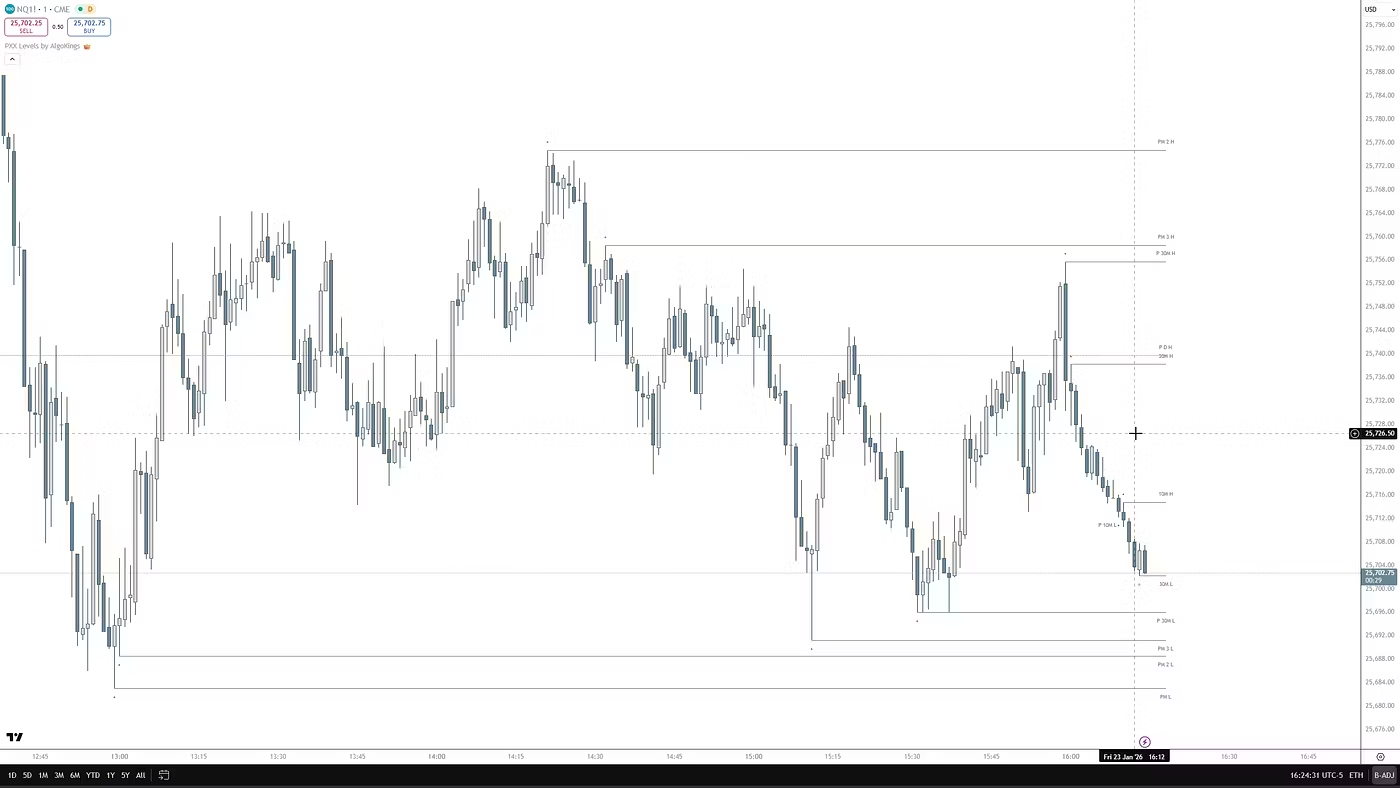
Internal Range Liquidity is formed inside the range by fair value gaps (price imbalances), order blocks, minor swing highs and lows, and equal highs/lows. It is typically read on lower or intraday timeframes and often acts as an intermediate objective: price dips back into the range to rebalance an imbalance or react to an order block before continuing. Internal liquidity is also where inducement lives, a tempting level that baits early entries before price moves toward the real target.
External Range Liquidity (ERL)
External Range Liquidity sits outside the range at the major swing high and swing low, the old highs and lows where stops cluster. Buy-side liquidity rests above highs (where short-sellers' stops and breakout buy orders sit); sell-side liquidity rests below lows (where long-holders' stops and breakout sell orders sit). ERL is usually a higher-timeframe consideration and is treated as the higher-priority target, the level more likely to drive deeper pullbacks or a shift in structure when it is taken.
The IRL to ERL rotation and how to read bias
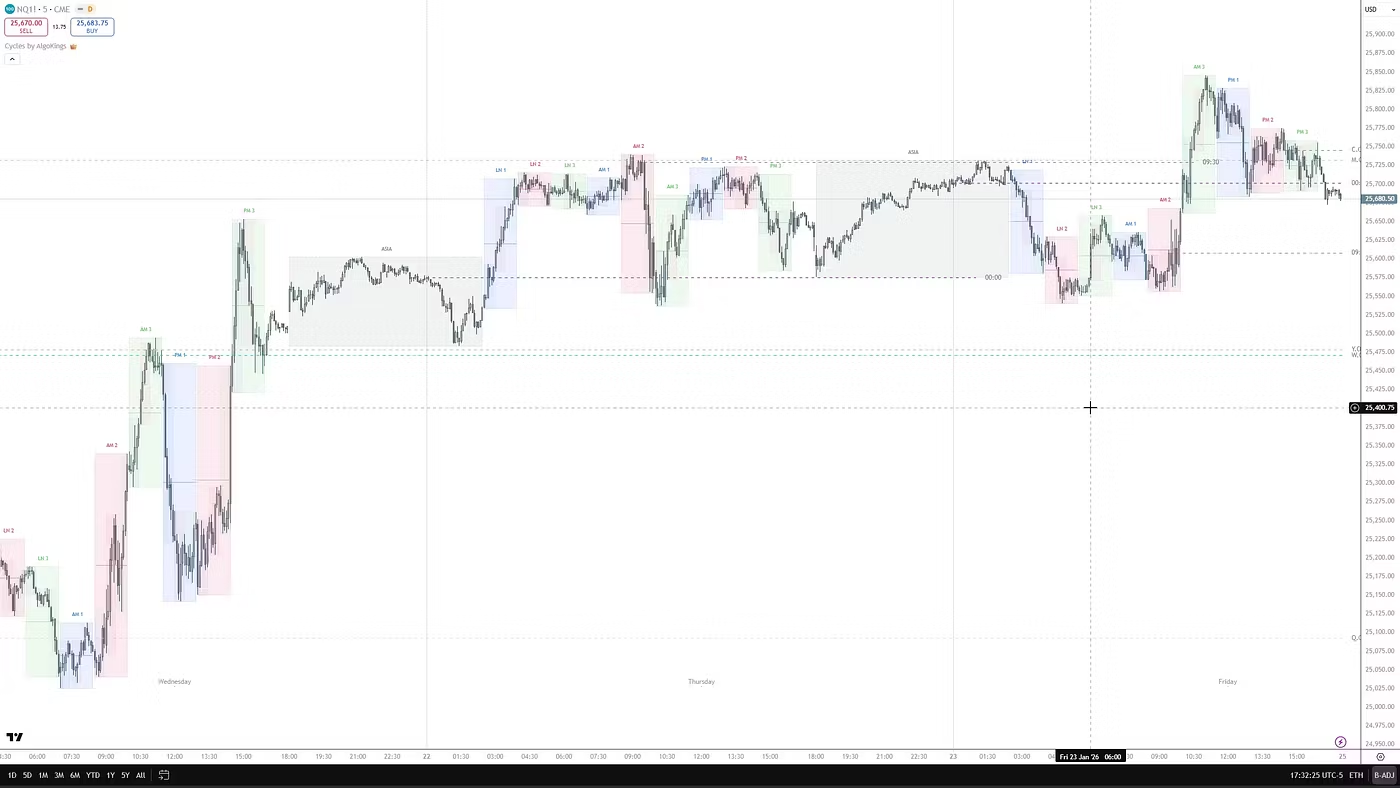
Price tends to rotate in a cycle: it takes external liquidity on one side, returns to fill internal liquidity inside the range, then expands to take external liquidity on the opposite side (external to internal to external). This rotation is the core mental model. Position within the range also informs bias: if price sweeps internal liquidity while clear external liquidity rests above, that can read as bullish, since the untouched ERL above becomes a logical magnet. The reverse applies for a bearish read. Premium (upper half of the range) and discount (lower half) refine where you would look to participate.
Turning the map into a plan (and where it breaks)
- Mark the range first: confirm the swing high and low actually swept liquidity before trusting any internal/external label.
- Wait for a sweep plus confirmation: a stop-raid into liquidity followed by displacement and a break of structure (BOS) or change of character (CHoCH) is more meaningful than a level being touched.
- Distinguish a sweep from a breakout: a sweep spikes through a level and reverses (grabbing stops); a genuine breakout holds beyond it. Mistaking inducement for a real move is a classic way to enter too early.
- Use levels as objectives, not promises: internal liquidity can serve as a partial or intermediate target and external liquidity as the final one, but taking ERL can lead to either reversal or continuation depending on higher-timeframe context.
- Mind the timeframe hierarchy: external levels demand more confluence and patience; internal setups are faster and lower-timeframe. Do not apply fast intraday tactics to higher-timeframe levels.
- Predefine invalidation and manage risk: ranges look obvious in hindsight but are messy in real time, so set a clear invalidation point and size positions conservatively. Nothing here guarantees an outcome.
Frequently asked questions
What is the difference between internal and external liquidity?
Internal liquidity (IRL) sits inside the dealing range and is formed by fair value gaps, order blocks, minor swing points and equal highs/lows. External liquidity (ERL) sits outside the range at the major swing high and swing low, where buy-side and sell-side stops cluster. Internal is often an intermediate objective or inducement; external is treated as the higher-priority target.
Is a fair value gap internal or external liquidity?
A fair value gap (price imbalance) is internal liquidity. It forms inside the dealing range, typically on lower timeframes, alongside order blocks and minor swing points. External liquidity instead refers to the old highs and lows at the outer edges of the range, not to imbalances within it.
What happens after price takes external liquidity?
It can either reverse or continue, depending on context, market structure and higher-timeframe bias. Sweeping external liquidity often precedes a deeper pullback or a shift in structure, but it is not a guaranteed reversal. Wait for displacement and a break of structure to confirm, and always define your invalidation in advance.
Risk disclosure
AlgoKings provides technical analysis indicators and educational material for informational purposes only. Nothing on this website is financial, investment or trading advice. Trading financial instruments carries a high level of risk and may not be suitable for every investor; you can lose some or all of your capital. Indicators do not predict future price movements and do not guarantee any outcome. You are solely responsible for your own trading decisions and risk management. Past performance is not indicative of future results.