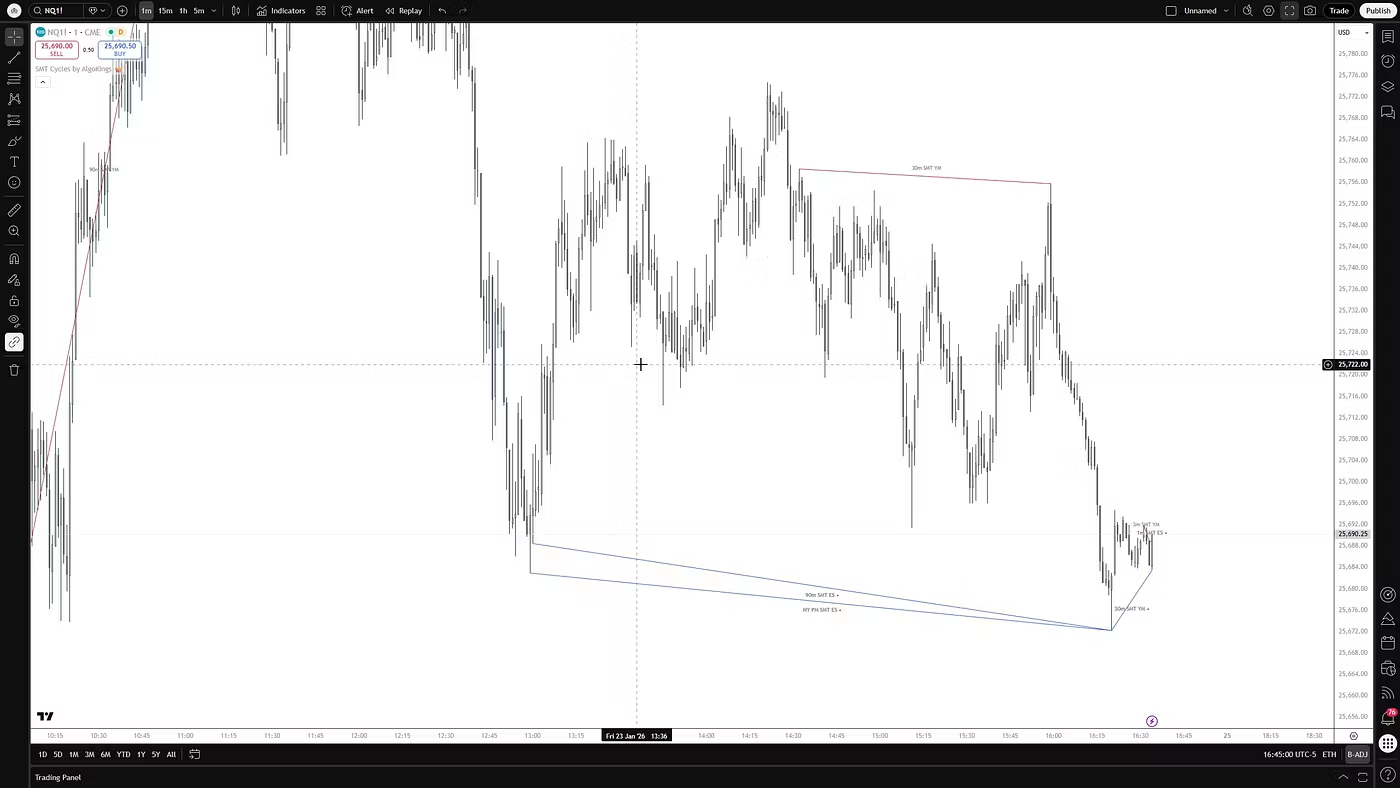
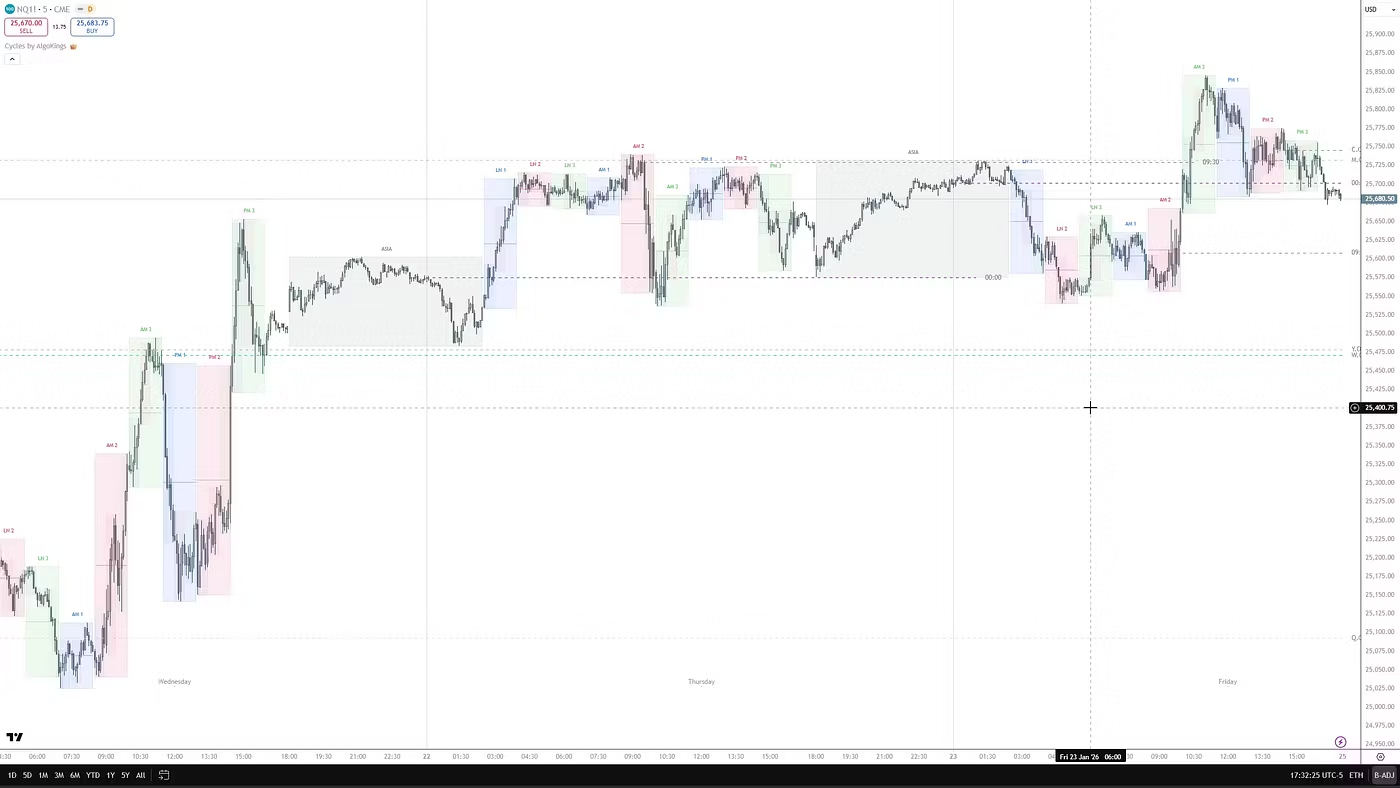
ICT Killzones Explained
ICT Killzones are specific, recurring intraday time windows when institutional ("smart money") activity, volume, and volatility are believed to peak, making them the preferred hours to apply Inner Circle Trader (ICT) setups. Popularized by Michael J. Huddleston, they act as a timing filter you layer onto your analysis, not a standalone buy or sell signal.
What ICT Killzones are and where they come from
The term "killzone" comes from Michael J. Huddleston, known as the Inner Circle Trader (ICT), and sits within the broader Smart Money Concepts framework. The idea is that large institutions transact during predictable hours, so volume and volatility cluster in a few narrow windows each day. Rather than watching charts around the clock, traders focus their attention on these zones, where price moves are thought to be more deliberate. Crucially, a killzone is a heuristic derived from ICT teaching, not an official standard, and the exact times and even the number of zones vary slightly between educators.
The four killzones and their times
Four zones are most commonly cited. All times below are in New York time (ET), the convention ICT material uses. Because the windows are narrow, anchoring everything to one timezone matters more than the precise minute.
- Asian killzone (~8:00 PM–12:00 AM/midnight ET; some sources use ~7:00–10:00 PM ET): mostly builds a consolidation range that later sessions trade against. It rarely trends on its own; its value is the high and low it leaves behind.
- London Open killzone (~2:00–5:00 AM ET): often the highest-activity window, frequently sweeping the Asian range before the day's intended direction emerges.
- New York AM killzone (~7:00–10:00 AM ET for forex, or ~8:30–11:00 AM ET for indices/futures): overlaps with London and is tied to the 8:30 AM news releases and 9:30 AM equity open.
- London Close killzone (~10:00 AM–12:00 PM ET): associated with retracement, reversal, and profit-taking behavior as the London session winds down.
The New York window is listed two ways on purpose. The forex killzone (~7–10 AM ET) and the indices/futures killzone (~8:30–11 AM ET) reflect different market drivers, so match the window to the instrument you actually trade rather than applying one universal time to everything.
What happens inside a killzone
The recurring logic is time plus price. Within a killzone, price often first runs (sweeps) liquidity beyond a prior high or low, frequently via a "Judas Swing" fake-out, before reversing toward its true intended direction. A common sequence is: liquidity sweep, then a market structure shift, then displacement in the new direction. This is why entering right at the killzone open is risky; traders typically wait for the sweep and the shift rather than assuming the first move is real. The same idea appears in the Power of 3 model (accumulation, manipulation, distribution).
How killzones fit with the rest of ICT
On their own, killzones only tell you when institutional participation is likely highest. The when has to be combined with a where and a why: liquidity pools that mark likely sweep targets, fair value gaps (FVGs) and order blocks as entry zones, market structure for direction, and concepts like optimal trade entry (OTE) for refinement. A clean killzone setup is one where timing, liquidity, structure, and an entry model all line up, not one that fires in every session every day.
Daylight saving, timezones, and practical setup
Exact clock times drift because U.S. (ET) and U.K. (London/BST) daylight saving changeovers are not synchronized, so the windows can shift by an hour for a few weeks each spring and autumn. To stay correct, anchor your chart to a defined timezone (most ICT users set TradingView to New York time) and use a session or killzone indicator that re-draws the zones automatically. Then build a simple workflow: mark the prior range, wait for the sweep, confirm a structure shift, and only then look for an entry at an FVG or order block inside the active killzone.
Important limitations
- Killzones do not guarantee volatility or favorable outcomes; high-impact news, holidays, and thin-liquidity days can invalidate the expected behavior.
- Do not confuse a multi-hour trading session with the narrower 2–3 hour killzone inside it.
- Mismatching instruments to sessions (for example, trading GBP pairs during the Asian killzone) often means thin liquidity and noisier moves.
- These are educational heuristics from ICT teaching, not a proven edge; treat them as one input within your own risk-managed process.
Frequently asked questions
What are the ICT Killzone times in New York time?
Commonly cited windows are the Asian killzone (~8:00 PM–12:00 AM/midnight ET, though some sources use ~7:00–10:00 PM ET), London Open (~2:00–5:00 AM ET), New York AM (~7:00–10:00 AM ET for forex, or ~8:30–11:00 AM ET for indices/futures), and London Close (~10:00 AM–12:00 PM ET). Times vary slightly by source and shift with daylight saving, so anchor your chart to one timezone.
Which killzone is the best to trade?
Many ICT traders favor the London Open and the New York AM windows because activity and volatility tend to be highest, especially during the London–New York overlap. "Best" still depends on your instrument and setup quality, and no window guarantees a result. Killzones are a timing filter, not a signal.
Do ICT Killzones work for crypto, stocks, and futures, or only forex?
The concept originated in forex but is applied to indices, futures, and crypto as well. The key is matching the right window and instrument: the indices/futures killzone (~8:30–11 AM ET) is tied to the 8:30 news and 9:30 equity open, which differs from the forex window. Crypto trades 24/7, so session boundaries are looser.
Risk disclosure
AlgoKings provides technical analysis indicators and educational material for informational purposes only. Nothing on this website is financial, investment or trading advice. Trading financial instruments carries a high level of risk and may not be suitable for every investor; you can lose some or all of your capital. Indicators do not predict future price movements and do not guarantee any outcome. You are solely responsible for your own trading decisions and risk management. Past performance is not indicative of future results.