Forex Trading Sessions Explained (London, New York, Asia)
Forex trades 24 hours a day, five days a week through four overlapping regional sessions — Sydney, Tokyo, London and New York — rolling around the clock from roughly 22:00 UTC Sunday to 22:00 UTC Friday with no central exchange. London is the largest and most liquid session, and the London–New York overlap is the highest-volume window of the day.
Because currencies trade over-the-counter rather than on one exchange, liquidity simply follows the working day around the globe. As one financial centre closes, the next opens, which is why the market never sleeps during the week — but it also means not every hour is equally active. The sessions below are approximate ramps in activity, not hard on/off switches.
The four sessions and their hours (UTC)
- Sydney — roughly 22:00–07:00 UTC (around 6 PM–3 AM ET). Opens the trading week on Sunday evening UTC.
- Tokyo (Asian) — roughly 00:00–09:00 UTC (around 8 PM–5 AM ET). The main Asian session.
- London (European) — roughly 08:00–17:00 UTC (around 3 AM–12 PM ET). The largest, most liquid session.
- New York — roughly 13:00–22:00 UTC (around 8 AM–5 PM ET). News-driven; closes the trading day.
- Important: anchor your schedule to UTC/GMT. Because the UK and US observe daylight saving on different dates, local clock times shift by an hour seasonally — but UTC never changes.
Overlaps: where volume concentrates
Activity peaks when two centres are open at once. The London–New York overlap (about 13:00–17:00 UTC, 8 AM–12 PM ET) is the highest-volume window of the day, typically with the tightest spreads and the largest moves. The earlier Tokyo–London overlap (around 08:00–09:00 UTC) is smaller but can pick up as European desks come online. Spreads tend to be widest at the Sunday open and during the thin late-New York/pre-Tokyo lull — useful context when weighing transaction costs.
Session character and which pairs move
- Asian (Sydney/Tokyo): generally quieter and more range-bound; JPY and AUD pairs are most active.
- London: trend-setting and highly liquid; EUR and GBP pairs dominate, alongside USD.
- New York: often news-driven around US data releases; USD pairs are most active, with the overlap amplifying EUR/USD and GBP/USD.
- Trading the wrong pair for the session — for example, expecting big EUR/USD moves during quiet Sydney hours — is a common mismatch worth avoiding.
Putting it into practice
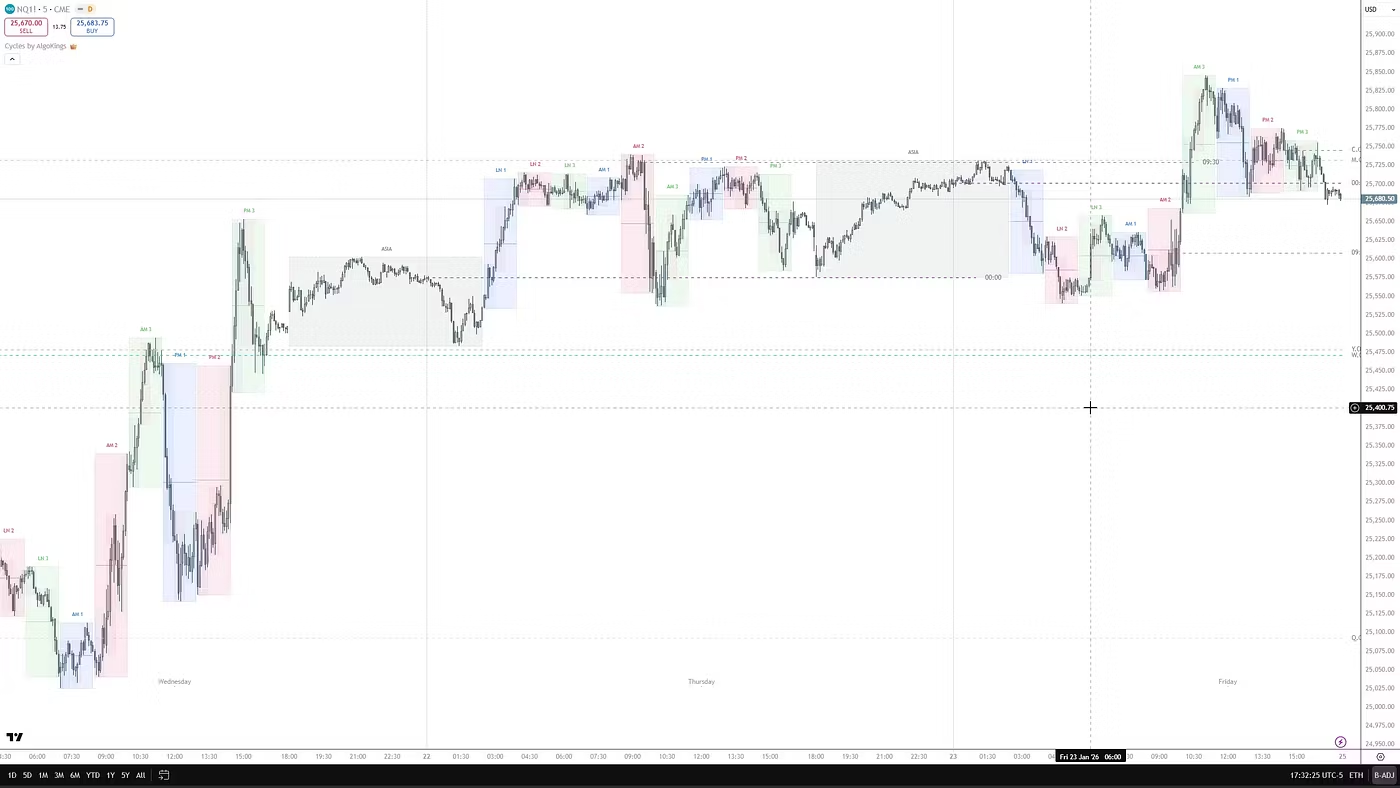
Match your strategy and pairs to a session rather than trading every hour. Tuesday to Thursday around the London–New York overlap tends to offer the most consistent liquidity, while late Fridays and the Sunday reopen are thinner. Note two technical gotchas: weekend news can gap price past resting orders at the Friday-to-Sunday reopen, and many broker platforms run on server time (often EET, GMT+2/+3), so session boxes can look shifted by a couple of hours unless you reconcile them to UTC. None of this is a recommendation to trade — always define your own risk and position sizing.
Frequently asked questions
What are the four forex trading sessions and when do they open?
Sydney (about 22:00–07:00 UTC), Tokyo/Asian (about 00:00–09:00 UTC), London (about 08:00–17:00 UTC) and New York (about 13:00–22:00 UTC). Local clock equivalents shift by an hour with daylight saving, so anchor to UTC.
What is the London–New York overlap and why does it matter?
It is the window (roughly 13:00–17:00 UTC, 8 AM–12 PM ET) when both centres trade at once. It is the highest-volume period of the day, usually with the tightest spreads and the biggest moves — which is why many traders focus their attention there.
Why do forex session times change by an hour during the year?
UTC/GMT never changes. Only local clocks shift for daylight saving — London (GMT/BST) and New York (EST/EDT) change on different dates, so the overlap moves for a few weeks each spring and autumn. Anchoring to UTC avoids the confusion.
Risk disclosure
AlgoKings provides technical analysis indicators and educational material for informational purposes only. Nothing on this website is financial, investment or trading advice. Trading financial instruments carries a high level of risk and may not be suitable for every investor; you can lose some or all of your capital. Indicators do not predict future price movements and do not guarantee any outcome. You are solely responsible for your own trading decisions and risk management. Past performance is not indicative of future results.