The ICT Silver Bullet Strategy Explained
The ICT Silver Bullet is a time-based intraday entry model from the Inner Circle Trader methodology. The rule is narrow: inside a specific one-hour window anchored to New York time, you take an entry on the first fair value gap that forms in your pre-decided bias direction. It is an entry technique and time filter, not a complete standalone system, and despite the name it is not a guaranteed win. The ICT Silver Bullet times are three fixed one-hour windows, covered in detail below.
ICT (Michael J. Huddleston) named it the 'Silver Bullet' because the setup is meant to be simple and repeatable: one defined tool applied at the same time every day. That repeatability is the useful part. The misleading part is the name's connotation, because no edge, however well-defined, wins every time. It is best treated as a disciplined routine for when and how to enter, layered on top of analysis done beforehand.
The three Silver Bullet time windows
The strategy only looks for trades inside three one-hour windows, each anchored to New York local time (Eastern Time). The whole opportunity lives inside 60 minutes, which is why execution happens on very low timeframes.
- London Open Silver Bullet: 3:00 to 4:00 AM New York time.
- New York AM Silver Bullet: 10:00 to 11:00 AM New York time, the most commonly traded window.
- New York PM Silver Bullet: 2:00 to 3:00 PM New York time.
The timezone and daylight-saving trap
This is the detail most traders get wrong. ICT's instruction is to anchor to New York local time and ignore your own timezone. The windows do not move with US daylight saving; only the label changes (EST in winter, EDT in summer). What does shift is the GMT/UTC equivalent: the 10:00 AM ET window is 3:00 PM GMT in winter (EST, UTC minus 5) but 2:00 PM GMT in summer (EDT, UTC minus 4). If you are outside the US, recompute your local equivalent when clocks change, and be cautious with sources that quote the windows only in GMT, since the anchor is New York time.
How the setup works, step by step
The window only tells you when to look. It does not tell you which direction to trade; you decide that first. The canonical sequence is bias, then liquidity sweep, then displacement, then the fair value gap entry.
- Establish a directional bias first. Before the window, mark key liquidity on higher timeframes (15-minute up to 1H/4H): prior session highs and lows, and swing highs and lows. Buy-side liquidity rests above highs, sell-side liquidity below lows. Form a view on where price is likely drawn.
- Wait for a liquidity sweep. Many of the cleaner setups begin when price runs a nearby pool of stops, taking out a recent high or low, before reversing back toward the intended target.
- Look for displacement. A sharp, one-sided move in your bias direction that leaves an imbalance behind it.
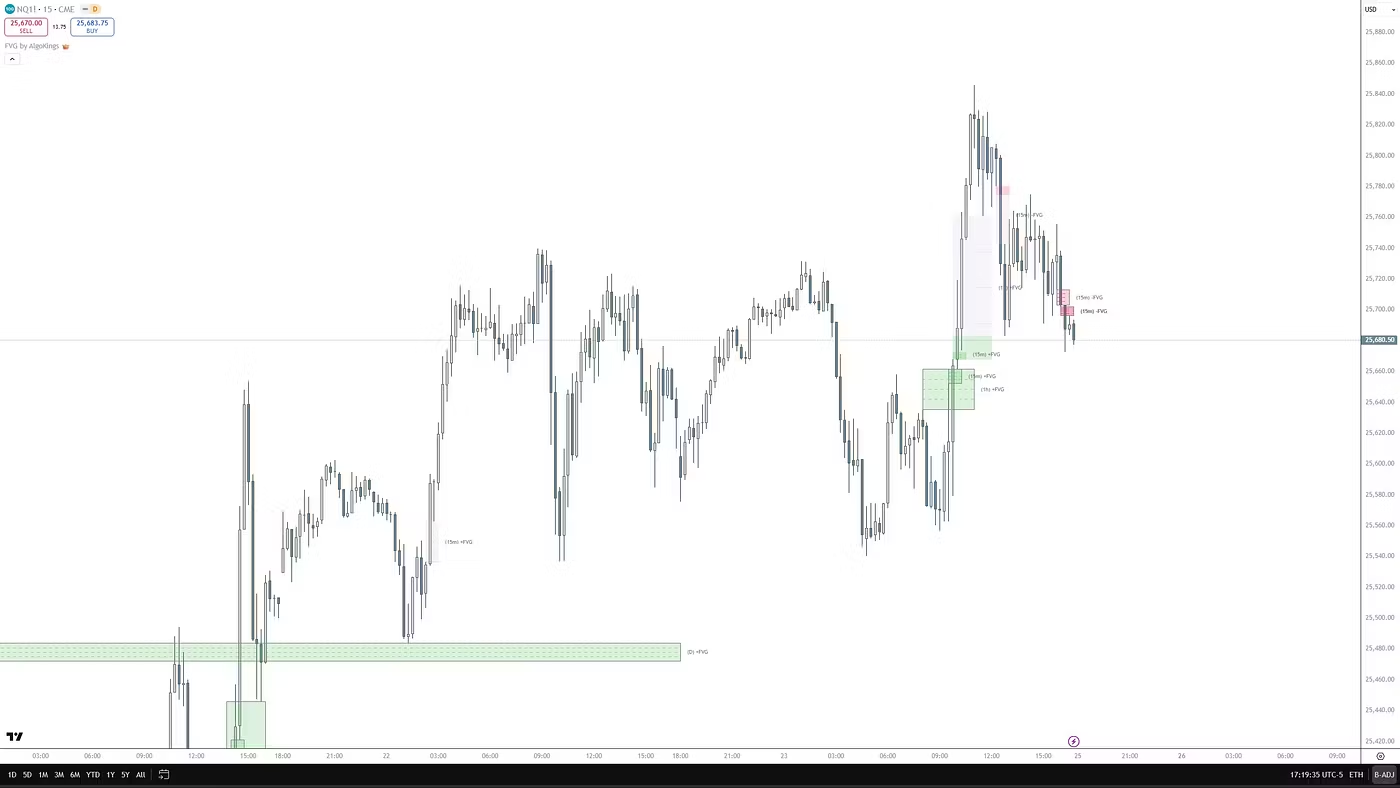
- Identify the first fair value gap. Displacement leaves a three-candle imbalance. In a bullish move it is the gap between the high of the first candle and the low of the third candle; in a bearish move it is the gap between the low of the first candle and the high of the third candle.
- Enter on the retracement into that gap. ICT's specific teaching is to take the first valid fair value gap in the bias direction inside the window, entering as price trades back into the gap rather than chasing the displacement candle itself.
- Define risk and target. A common placement is a stop beyond the swing that created the move, or beyond the origin of the displacement; the target is the next liquidity pool or session high/low you mapped. ICT material often frames this around a minimum 1:2 risk-to-reward.
Markets and timeframes it suits
Because the window is only 60 minutes, execution typically happens on the 1-, 3- or 5-minute chart, while the 15-minute and higher are used to map bias and liquidity. The model is most associated with instruments that are liquid during New York hours: index futures such as the Nasdaq (NQ) and S&P 500 (ES), major FX pairs like EUR/USD, GBP/USD and USD/JPY, and gold. Thin or quiet markets tend to produce fewer clean sweep, displacement and fair value gap sequences.
Does it actually work? An honest look at the win rate
Win-rate claims around 70 to 80 percent circulate widely on vendor blogs, but they are marketing rather than audited evidence. Independent backtests report highly variable performance: stronger in some months and market regimes, weaker in others. Vendor screenshots are also prone to selection bias, showing winning examples rather than the windows where no clean setup formed or the trade failed. Any fixed win-rate figure should be treated with caution, and hypothetical or simulated results carry well-known limitations. This is educational material, not financial advice or a promise of profits.
Common mistakes and misconceptions
- Trading every window every day. Many consistent users focus on a single window, often New York AM (10 to 11), that fits their schedule.
- Overtrading inside the window. Taking the second, third or fourth fair value gap, or forcing a trade with no clean sweep, displacement and gap. The intent is one quality attempt.
- Chasing the displacement candle instead of waiting for the retracement into the fair value gap.
- Getting the timezone wrong, by using local time or the wrong daylight-saving conversion and trading the window an hour off.
- Skipping the higher-timeframe bias and applying the fair value gap mechanic blindly, which reduces direction to a coin flip.
- Treating 'Silver Bullet' as a guarantee, or trading without a predefined stop and target.
Silver Bullet vs Killzones vs Macros
These ICT timing concepts are often confused. Killzones are broad session windows (such as the London or New York open) used to focus when you look for setups. Macros are short windows, often around 20 minutes, tied to expected algorithmic activity, for example 9:50 to 10:10 AM. The Silver Bullet is a specific one-hour fair value gap entry model that overlaps the New York killzone: narrower and more rule-bound than a killzone, and broader than a macro.
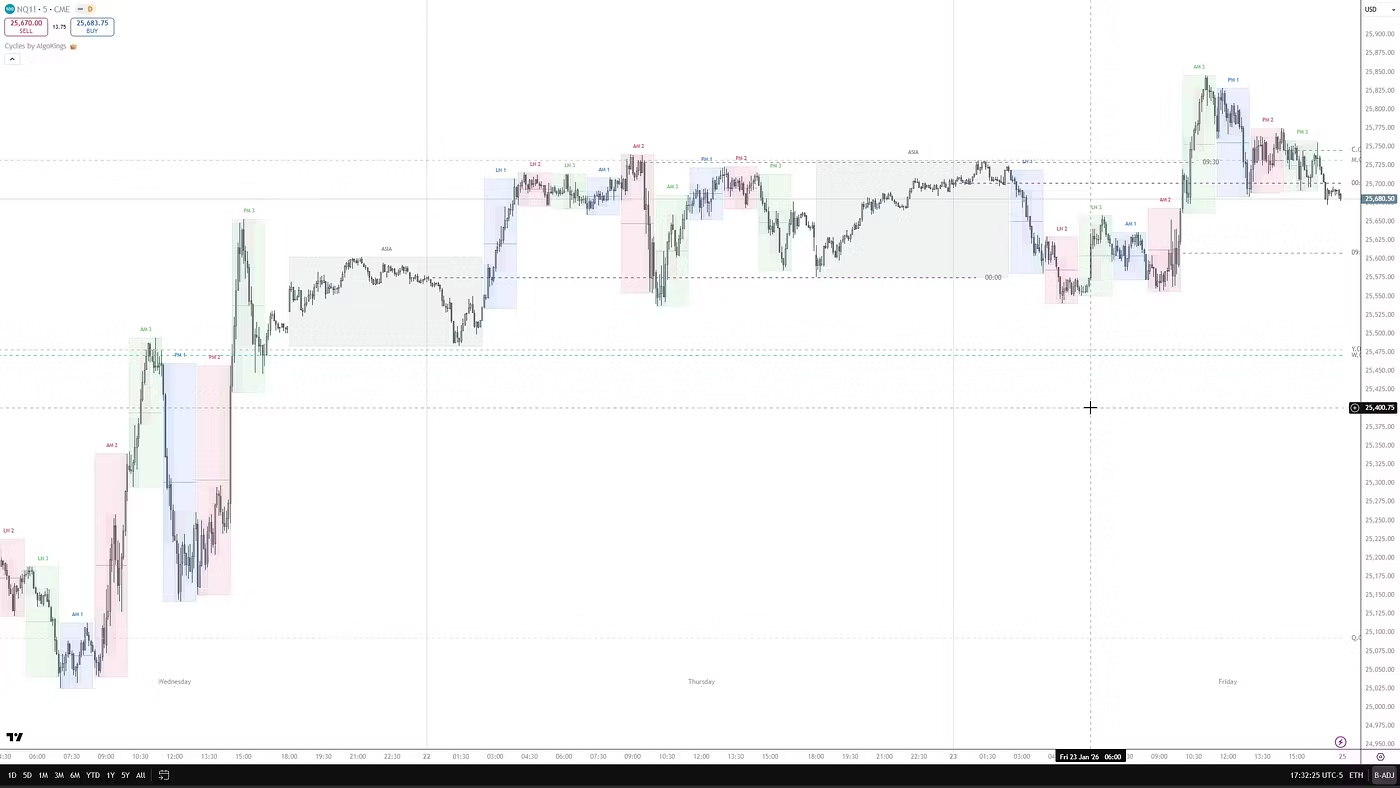
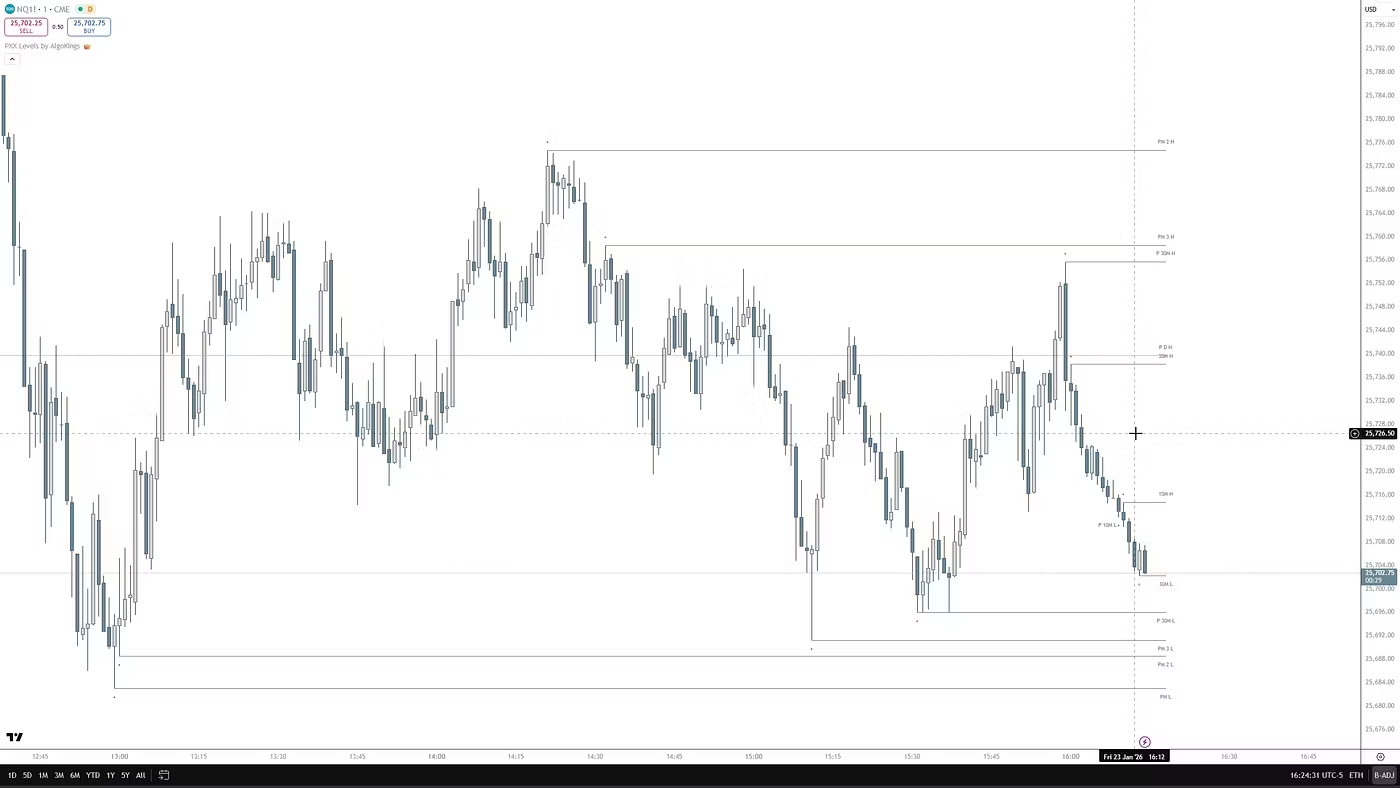
Tools mainly help by keeping the manual work objective: detecting fair value gaps as they form, plotting buy-side and sell-side liquidity, and marking the session windows on the chart so you are not converting timezones by hand. AlgoKings' FVG indicator and PXX Levels, or the full SMC Package, automate that markup. They are analytical aids to a discretionary process, not auto-signals, and not a substitute for your own bias and risk management.
Frequently asked questions
What are the ICT Silver Bullet times?
There are three one-hour windows, all anchored to New York local time: the London Open Silver Bullet (3:00 to 4:00 AM), the New York AM Silver Bullet (10:00 to 11:00 AM, the most commonly traded), and the New York PM Silver Bullet (2:00 to 3:00 PM). Many traders focus on just one.
Is the Silver Bullet anchored to EST or EDT, and does it change with daylight saving?
Anchor to New York local time. The window itself does not move with US daylight saving; only the label changes (EST in winter, EDT in summer). The GMT equivalent does shift, so 10:00 AM ET is 3:00 PM GMT in winter but 2:00 PM GMT in summer. Traders outside the US should recompute their local time when clocks change.
How do I enter on the fair value gap?
Inside the window, wait for a liquidity sweep and a sharp displacement move in your bias direction. That move leaves a three-candle fair value gap. ICT's teaching is to take the first valid gap in your direction and enter as price retraces into it, rather than chasing the displacement candle. Risk is commonly placed beyond the gap or the nearest swing.
Does the Silver Bullet strategy actually work, and what is the real win rate?
There is no audited proof. The 70 to 80 percent figures seen on vendor sites are unverified marketing, and independent backtests show results vary widely by market regime, better in some periods and worse in others. It can be a useful, disciplined entry routine, but it is not a guaranteed edge. This is education, not financial advice or a profit promise.
Do I need a higher-timeframe bias, or can I trade the window blindly?
You need a bias. The window only tells you when to look, not which direction to trade. Without a higher-timeframe read of where liquidity is drawing price, you are guessing which side of the fair value gap to take, and that is where most losses come from.
How is the Silver Bullet different from ICT Killzones and Macros?
Killzones are broad session windows for focusing your attention; Macros are short windows, often around 20 minutes, tied to algorithmic activity, such as 9:50 to 10:10 AM; the Silver Bullet is a specific one-hour fair value gap entry model that overlaps the New York killzone. It is narrower and more rule-bound than a killzone and broader than a macro.
Risk disclosure
AlgoKings provides technical analysis indicators and educational material for informational purposes only. Nothing on this website is financial, investment or trading advice. Trading financial instruments carries a high level of risk and may not be suitable for every investor; you can lose some or all of your capital. Indicators do not predict future price movements and do not guarantee any outcome. You are solely responsible for your own trading decisions and risk management. Past performance is not indicative of future results.