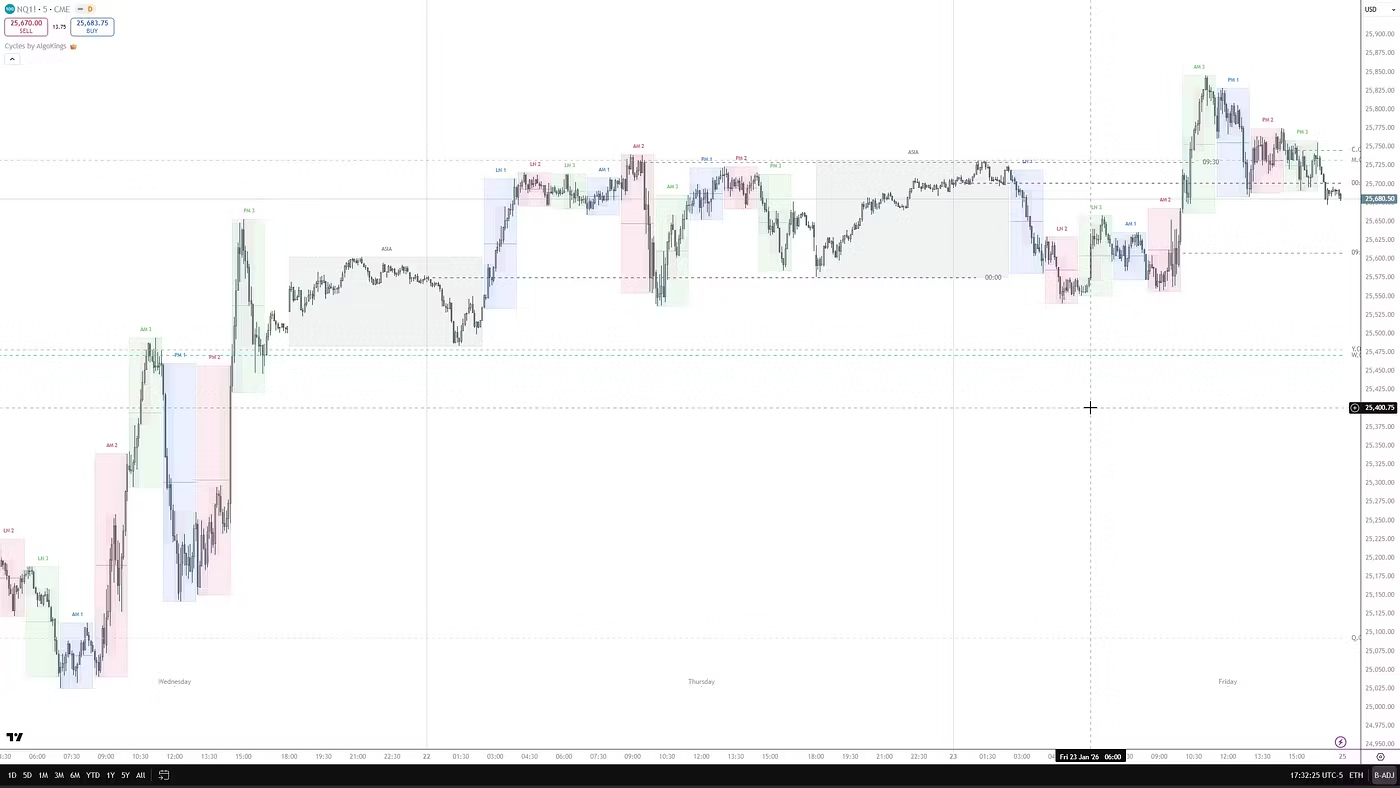
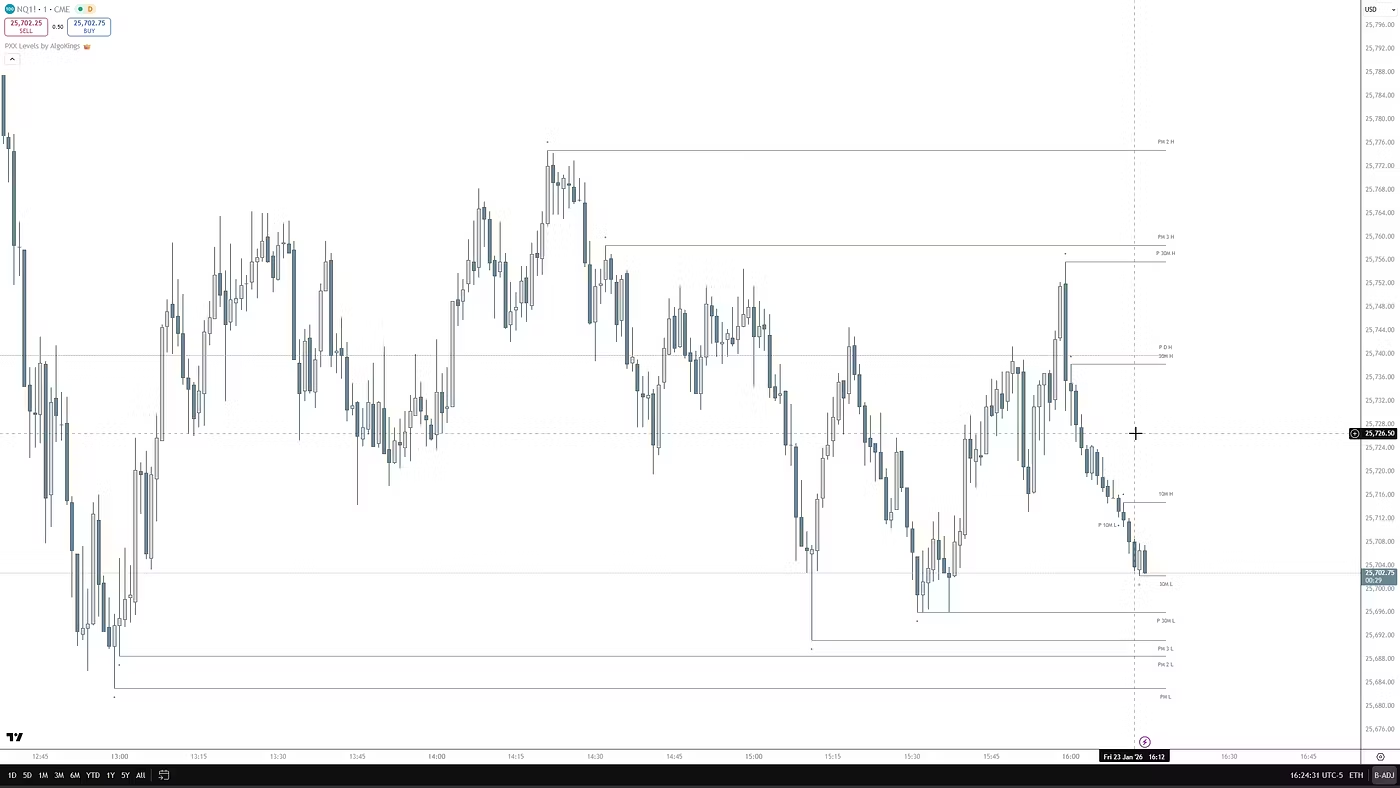
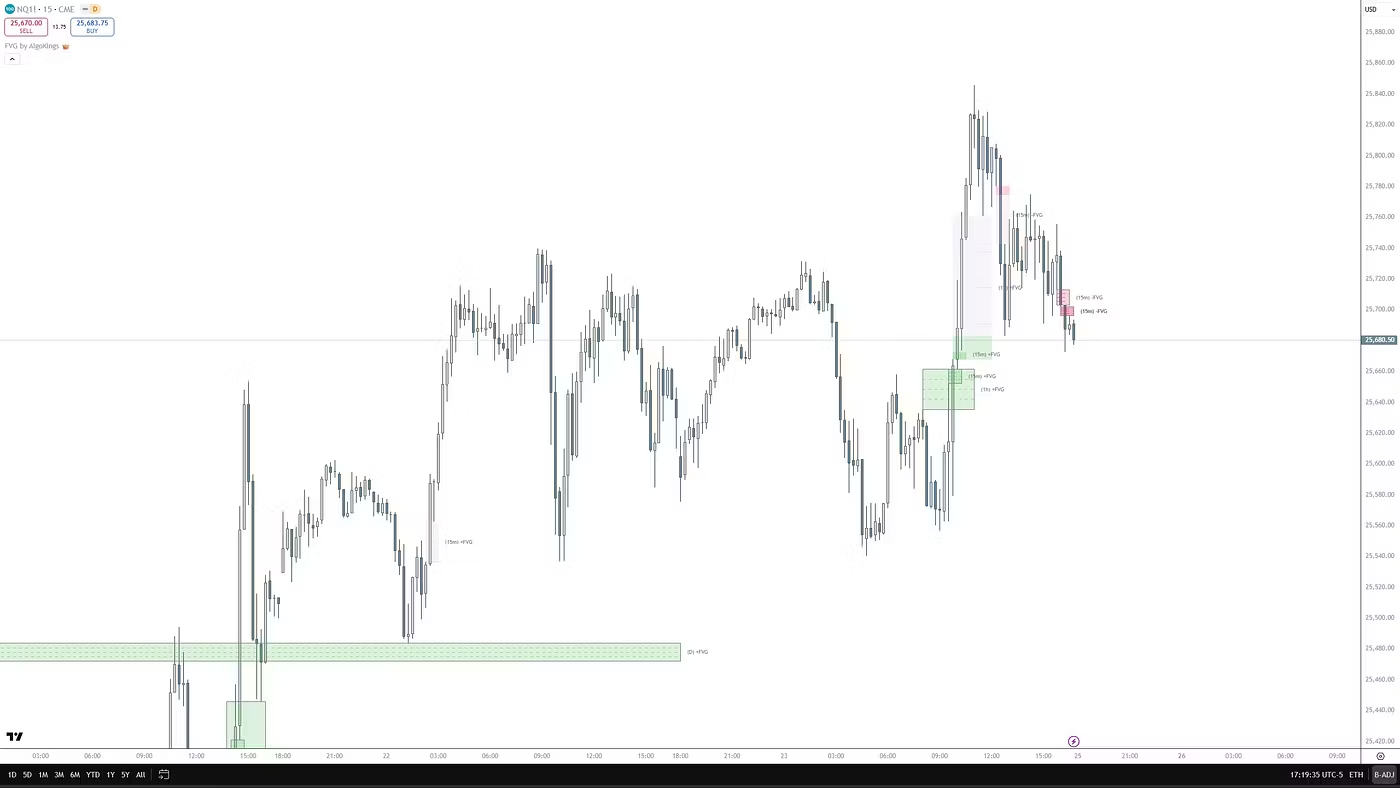
Break of Structure (BOS) Explained
A Break of Structure (BOS) is a Smart Money Concepts term for a trend-continuation signal: price closes beyond the most recent swing point in the same direction as the existing trend, confirming the prevailing market structure is still intact. It describes what structure just did — it does not predict what happens next.
In BOS trading, a break of structure is a way of reading and labelling market structure rather than a fixed, standardised indicator. In an uptrend, structure is a series of higher highs and higher lows; in a downtrend, lower highs and lower lows. A break of structure is price extending that pattern by taking out — and closing beyond — the last relevant swing extreme. It is one of the more useful ways to stay aligned with a trend, and one of the most commonly misread.
Bullish vs bearish BOS
The direction of the break relative to the trend is everything. A BOS confirms the trend you are already in — it does not signal a reversal (that is a Change of Character, covered below).
- Bullish BOS: in an uptrend, price closes above the most recent swing high, printing a new higher high and confirming the uptrend continues.
- Bearish BOS: in a downtrend, price closes below the most recent swing low, printing a new lower low and confirming the downtrend continues.
- The opposing swing — the higher low in an uptrend, or the lower high in a downtrend — is expected to hold for the structure to remain valid.
SMC traders often frame this as 'smart money' pushing price beyond a key level. That institutional narrative is a mental model for how to think about BOS, not something a chart can prove. Treat it as a useful lens, not established fact.
The one rule that matters most: body close, not wick
This is the single biggest source of mistakes. A valid BOS requires a candle body to close beyond the swing level — ideally a decisive candle with follow-through. A wick that pierces the level but closes back inside is not a break of structure. More often it is a liquidity sweep (stop run): price grabs the stop orders resting beyond the level, then reverses. The community shorthand is 'wicks are traps, closes are facts.'
Be honest about what this rule does, though. Waiting for a body close reduces false signals; it does not make BOS reliable on its own. Even a clean close can fail and reverse. The close-versus-wick rule improves signal quality — it is not a guarantee.
BOS vs CHoCH (and MSS)
These three terms cause more confusion than anything else in market structure, mostly because the SMC and ICT community has not standardised them. The core distinction is direction relative to the trend.
- BOS (Break of Structure): a break WITH the trend — signals continuation.
- CHoCH (Change of Character): a break AGAINST the trend — the first warning of a possible reversal (for example, price breaking the last higher low during an uptrend).
- MSS (Market Structure Shift): used mainly in ICT, often as a near-synonym for CHoCH or as a 'confirmed' reversal break — definitions vary by educator.
In practice a CHoCH usually appears first at a turning point, and a BOS in the new direction then confirms the new trend. Some educators also add an 'inducement' requirement — price must sweep a minor liquidity level before the break counts as a 'major' BOS. That is a specific refinement, not a universal rule, so always check which definition a given source is using.
Timeframe and subjectivity: the honest limitations
Structure is fractal, which means a BOS is always relative to the chart you are looking at. A break of structure on the 5-minute chart can be a meaningless pullback inside a 4-hour trend — the same price action is signal or noise depending on the timeframe. A common workflow uses a higher timeframe (daily or 4H) to set directional bias, then a lower timeframe for entry precision.
It is also worth distinguishing an internal BOS (a minor break within a larger leg) from an external BOS (a break of a major higher-timeframe swing); the external one is the stronger continuation signal. And because deciding which swing point 'counts' takes judgement, two traders can label the same chart differently. That subjectivity — plus the risk of drawing 'hindsight BOS' after the fact to fit a bias — is a real limitation, not a detail to gloss over.
How traders use BOS
BOS is usually one input, not a standalone system. Trading every minor break in a choppy range tends to produce a stream of false signals. Many SMC traders combine it with other context rather than chasing the break itself. The following points are educational, not financial advice.
- Use the higher timeframe to check the trend a BOS is meant to continue.
- Rather than entering the instant the level breaks, some traders wait for a pullback or retest of the broken level — often into an order block or fair value gap — with a confirming close.
- Read the break alongside liquidity and imbalance for confluence, and define where the idea would be invalidated.
Bottom line: a break of structure confirms continuation, it does not predict it. Wait for the body close, respect the higher-timeframe context, accept that any break can fail, and treat BOS as one piece of a wider read on the market rather than a standalone edge.
Frequently asked questions
What is a Break of Structure (BOS) in trading?
A Break of Structure is when price closes beyond the most recent swing point in the direction of the existing trend — above a swing high in an uptrend, or below a swing low in a downtrend. It confirms the trend is continuing. It is a descriptive read of market structure, not a prediction, and any break can still fail.
What is the difference between BOS and CHoCH?
Direction relative to the trend. A BOS is a break WITH the trend and signals continuation; a CHoCH (Change of Character) is a break AGAINST the trend and is the first warning of a possible reversal. A CHoCH typically comes first at a turning point, then a BOS in the new direction confirms the new trend.
Does a wick count as a Break of Structure, or do I need a candle to close beyond the level?
Most SMC traders require a candle body to close beyond the level. A wick that pierces the swing point but closes back inside is usually read as a liquidity sweep (stop run), not a break of structure. Waiting for the body close filters out many false signals, though it does not guarantee the move continues.
What is the difference between a BOS and a liquidity sweep?
A BOS holds beyond the level with a body close and continues the trend. A liquidity sweep spikes through the level to trigger resting stop orders and then reverses, closing back inside. The body close is what separates a genuine structural break from a stop run.
What timeframe should I use to identify a BOS?
Structure is fractal, so a BOS is relative to the chart you are on — a break on the 5-minute can be noise inside a 4-hour trend. A common approach is to set directional bias on a higher timeframe (daily or 4H) and use a lower timeframe for entry precision.
Is a Break of Structure a reliable signal on its own?
No. BOS is a confirmation tool, not a standalone edge, and there is no fixed, verifiable win rate — be sceptical of specific percentages. It tends to work best as one input combined with liquidity, order blocks or fair value gaps, with risk always defined. Treat it as context, not a guaranteed move.
Risk disclosure
AlgoKings provides technical analysis indicators and educational material for informational purposes only. Nothing on this website is financial, investment or trading advice. Trading financial instruments carries a high level of risk and may not be suitable for every investor; you can lose some or all of your capital. Indicators do not predict future price movements and do not guarantee any outcome. You are solely responsible for your own trading decisions and risk management. Past performance is not indicative of future results.