Inversion Fair Value Gap (IFVG) Explained
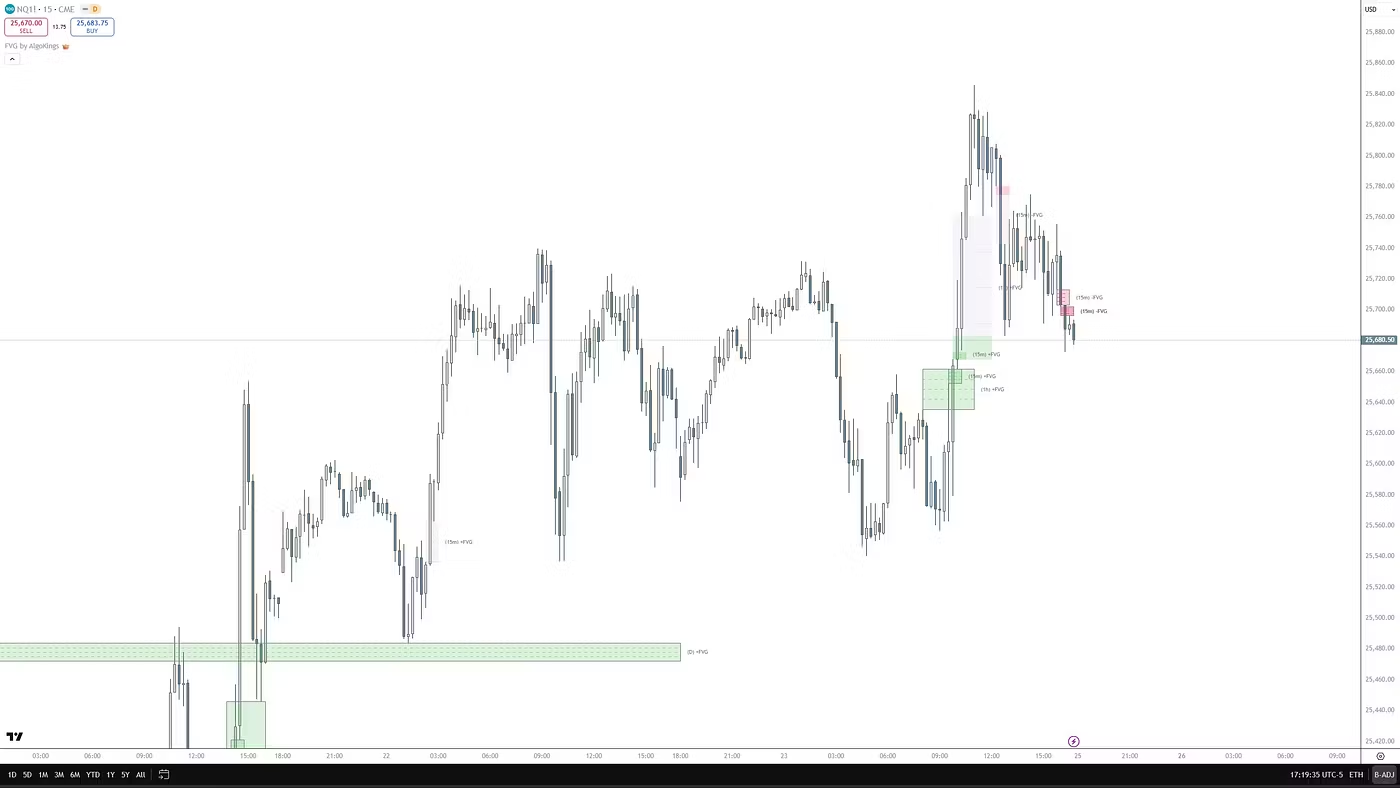
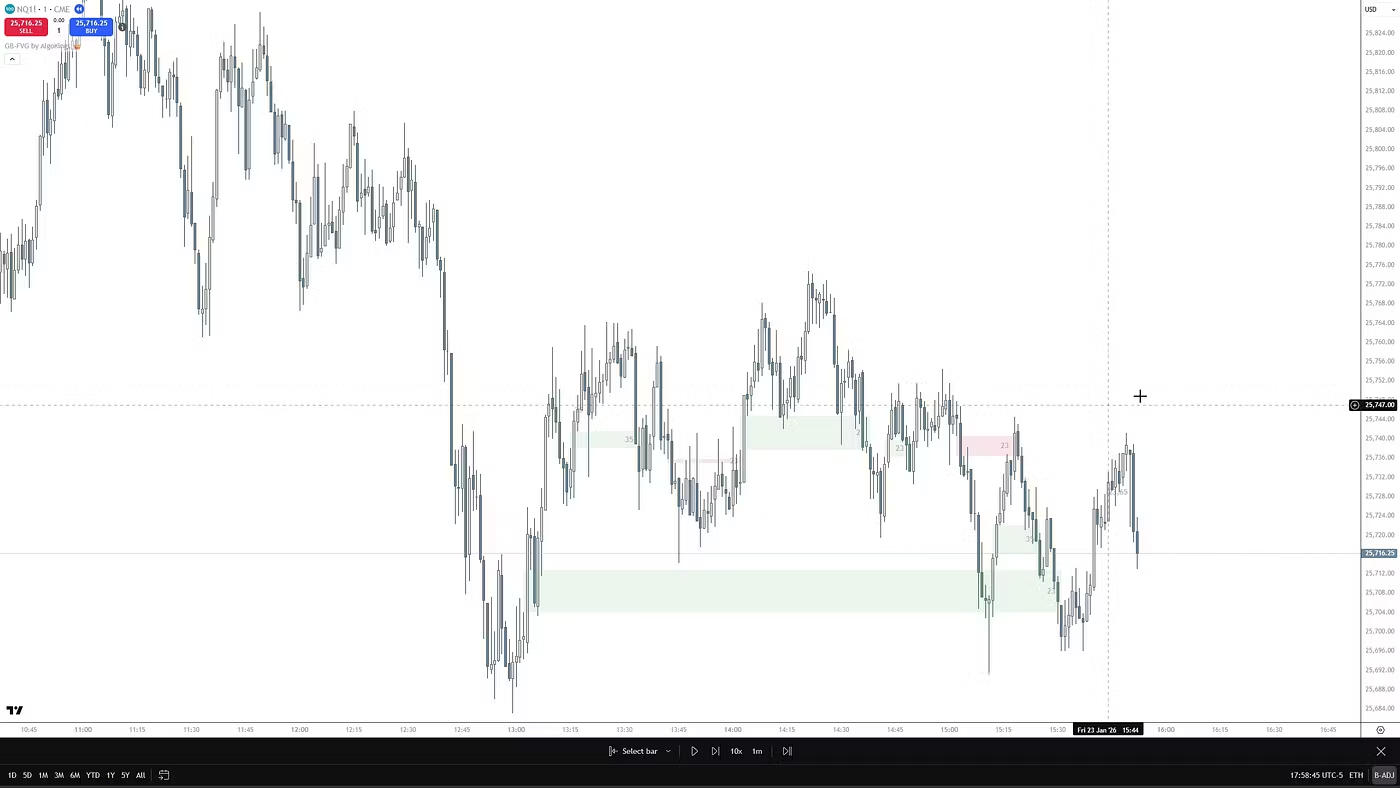
An Inversion Fair Value Gap (IFVG) is a Fair Value Gap that price has broken through, causing the zone to flip its role — a former support area becomes resistance, or a former resistance area becomes support. Popularised within the ICT (Inner Circle Trader) framework, the IFVG is an analytical concept traders use to read shifts in momentum, not a buy or sell signal.
First, what a Fair Value Gap is
A Fair Value Gap (FVG) is a three-candle price imbalance: the gap between the first candle's wick and the third candle's wick, left behind when the middle candle moves so fast that buyers and sellers never fully transact across that range. The market often revisits this inefficiency to 'rebalance' it, which is why an unfilled FVG is commonly watched as a potential pullback or retracement zone in the direction of the original move. Understanding this is the foundation for the inversion concept — an IFVG is simply what a Fair Value Gap becomes after it fails to hold.
How an IFVG forms
An inversion happens in four steps. (1) An FVG forms. (2) Instead of holding as expected, price trades decisively through it and invalidates it. (3) The breached gap now flips its role — a bearish FVG broken to the upside becomes a bullish support-type zone, and a bullish FVG broken to the downside becomes a bearish resistance-type zone. (4) Price often returns to retest the inverted zone from the other side and reacts there, which is the moment many traders watch.
Bullish IFVG vs bearish IFVG
- Bullish IFVG: comes from a FAILED BEARISH FVG that was broken to the upside. It now acts as potential support and is watched for long-side continuation.
- Bearish IFVG: comes from a FAILED BULLISH FVG that was broken to the downside. It now acts as potential resistance and is watched for short-side continuation.
- Common mistake: beginners often invert this logic. Remember the source of the zone is the opposite type to the direction it now favours — a bullish IFVG is born from a bearish gap that failed.
- Confirmation matters: a candle CLOSE through the gap is a stronger, more reliable sign of inversion than a single wick poking through.
IFVG vs a regular FVG
A regular FVG is generally treated as a retracement zone in the original trend direction — price pulls back into it and continues. An IFVG is a role-reversed zone that signals a momentum or sentiment shift: the imbalance failed, the level flipped, and it is now more often used as a continuation area in the new direction. They are not interchangeable, and treating an inverted zone like a fresh FVG is a frequent error.
How traders typically work with an IFVG
As an educational framework, the IFVG is used as a confirmation or confluence tool, never a standalone system. Two common approaches exist: an aggressive entry on confirmation of the break, or a conservative entry using a limit order on a retrace back into the zone. Risk is always defined — a protective stop is placed just BEYOND the inverted zone or a relevant swing high/low (not inside the gap, which invites premature stop-outs), and objectives are framed by a fixed risk-to-reward ratio (e.g. 1:2 or 1:3) or the next liquidity or structure level. An IFVG is considered invalid once price trades back through and beyond it. Price can and does break straight through any zone, so a stop is non-negotiable, and forcing setups in choppy or erratic conditions tends to produce false signals.
Confluences and timeframe
IFVGs are considered higher-probability when they line up with other context: a prior liquidity sweep (session/daily highs and lows, equal highs/lows), a market structure shift (MSS/BOS), premium/discount (OTE) positioning, nearby order blocks, ICT kill zones, and — most importantly — your higher-timeframe directional bias. They work across scalping, day, and swing timeframes, but very low timeframes are noisier and produce more false inversions, so aligning with HTF bias is essential.
Frequently asked questions
Is it called an 'inversion' or 'inverse' fair value gap?
Both terms refer to the same concept and are used interchangeably. 'Inversion Fair Value Gap' and 'Inverse Fair Value Gap' (IFVG) both describe a Fair Value Gap that has been broken through and has flipped its role from support to resistance, or vice versa.
Does an FVG need a candle close through it, or is a wick enough?
Both are used, but a candle that CLOSES through the gap is the stronger, more reliable confirmation of an inversion. A single wick poking through is weaker evidence and produces more false signals, especially on low timeframes, so many traders wait for a close.
Is an IFVG a reversal signal or a continuation signal?
It is primarily treated as a continuation concept that reflects a momentum or sentiment shift: once a gap fails and inverts, traders watch the retest for continuation in the new direction. It is a confluence tool, not a standalone signal, and is best read alongside higher-timeframe bias and market structure.
Risk disclosure
AlgoKings provides technical analysis indicators and educational material for informational purposes only. Nothing on this website is financial, investment or trading advice. Trading financial instruments carries a high level of risk and may not be suitable for every investor; you can lose some or all of your capital. Indicators do not predict future price movements and do not guarantee any outcome. You are solely responsible for your own trading decisions and risk management. Past performance is not indicative of future results.